


Alternative Extramural Activities for Kids in Sandton: Beyond Traditional Sport

Published: June 2026
Most parents in the Sandton and Bryanston area have been through some version of this. Cricket trials, football registration, swimming lessons. The child attends for a few weeks, loses interest, or finds the competitive environment difficult. The activity becomes a battle before it becomes a benefit.
The question most parents eventually ask is whether there is something that combines physical development, discipline, and genuine engagement without the pressure of team sport performance. In the northern suburbs, there are a few options. Some of them are worth knowing about.

What Actually Makes an Extramural Stick
Before the list, it is worth understanding why most activities lose children in the first six months.
The common factors in activities that last: the child experiences early competence (they can do something, even something small, within the first few sessions), the social environment is cooperative rather than competitive, and the activity holds genuine novelty for longer than a few weeks.
Activities built entirely on performance outcomes tend to shed children who are not immediately talented. Activities built on skill accumulation, where there is always something new to learn, hold children much longer.
The Options in the Sandton and Bryanston Area
Swimming (various clubs)
High carry value for physical safety and fitness. Low carry value for children who find the repetitive lane-based training uninspiring after the first year. Strong choice for water-confident children who respond well to measurable times and stroke improvement.
Excellent for developing body awareness, flexibility, and upper-body strength. The structured competitive pathway works very well for children who thrive under structured correction. Can be demanding and exclusionary for children who develop coordination later.
Parkour and Calisthenics (Concrete Foundation Crew, Morningside)
Strong option for physically adventurous children with high energy and risk tolerance. The skill ceiling is very high, which keeps older children engaged. The environment is typically less structured, which suits some children and loses others.
Chess and Cognitive Development Programmes
Worth mentioning because parents sometimes overlook purely cognitive extramurals. Chess develops patience, pattern recognition, and strategic thinking. Not a physical activity, but worth pairing with a physical one.
Capoeira (Capoeira Valente, Bryanston)
The most unusual option on this list, and the one that consistently surprises parents when they see it in practice.
Why Capoeira Works for Children Who Do Not Fit the Standard Mould
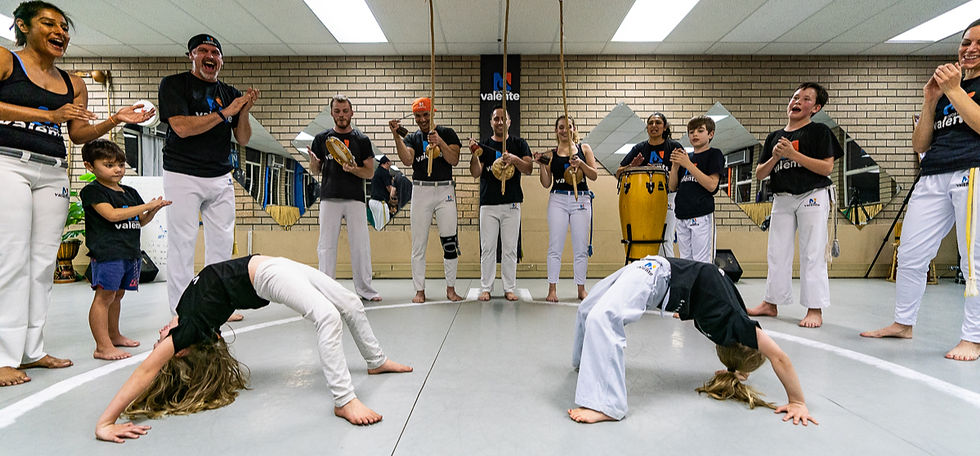
Capoeira is a 400-year-old Afro-Brazilian martial art that integrates movement, music, acrobatics, and live percussion into a single practice. A class for children aged 5 to 12 covers rolling, cartwheeling, kicking, dodging, balancing, and call-and-response singing in Portuguese.
The practice is non-contact at the children's level. The roda, the training circle, is a cooperative game rather than a competitive bout. Children of different ages and abilities train together, which means a 6-year-old beginner is not constantly measured against the most coordinated child in the room.
The neurological engagement is significant and worth understanding. The movements cross the body's midline (left hand to right foot, right hand to left foot), which activates the cerebellum and supports the development of bilateral coordination. The vestibular system, which governs balance and spatial awareness, is stimulated through inversions and spinning movements. These are the exact developmental inputs that children who spend significant time on screens are often missing.
Teachers and parents regularly report improvements in school focus and classroom behaviour within the first two to three months of regular attendance.
The music element adds a layer that no other martial art offers. Children learn to move in time with live drumming, developing auditory coordination alongside physical coordination. By the time they are attending for six months, most children can sing basic Portuguese songs from the capoeira tradition.
Class Details
Capoeira Valente runs kids classes (ages 5 to 12) in Bryanston at The Boutique Gym at The Campus.
Saturday at 09:15.
The first class is free.
*Capoeira Valente is based at [The Boutique Gym at The Campus], 1st Floor, Cnr Sloane Street and Main Road, Bryanston. All levels welcome. No experience necessary. Children of all fitness and coordination levels are welcome.*


Comments